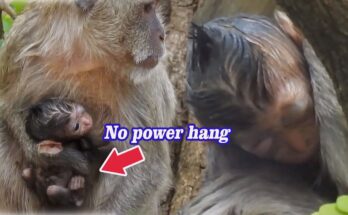
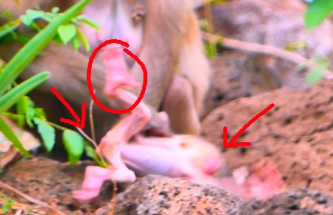
The bond between a mother and her newborn is one of the most profound in nature, and nowhere is this more evident than in the gentle embrace of a monkey mother as she cares for her baby in the first hours of life. From the moment of birth, a mother monkey’s instincts take over, ensuring her infant’s survival, warmth, and well-being in the fragile moments of its new existence.
The First Moments: A Mother’s Instincts
As soon as the baby monkey emerges, the mother immediately turns her attention to it, often licking and grooming the newborn to remove birth fluids. This ritual is not just about cleanliness; it stimulates circulation and breathing, helping the tiny creature adjust to the outside world. The newborn, often weak and unsteady, relies entirely on its mother for warmth and security. In species such as macaques and langurs, the mother cradles her baby against her chest, providing skin-to-skin contact that helps regulate the infant’s body temperature.
The Power of Touch and Protection
A monkey mother’s embrace is more than just a physical act—it is an essential form of communication. The newborn clings instinctively to its mother’s fur, wrapping its tiny fingers around her, while she supports it with one arm or holds it tightly against her belly. This closeness reassures the infant and helps it feel secure in an unfamiliar world.
During these first hours, the mother remains extremely protective, rarely allowing others to come near her baby. In many primate species, mothers isolate themselves briefly or stay within close-knit female groups to avoid potential dangers. They will often bare their teeth or issue warning vocalizations if they sense any threat to their newborn.
Nourishment and First Feeding
A critical part of a newborn monkey’s survival is its first feeding. Shortly after birth, the mother positions the baby to nurse, guiding it toward her nipple. The rich, nutrient-filled milk provides essential antibodies and energy, strengthening the infant’s fragile body. The first milk, known as colostrum, is packed with vital nutrients and immune-boosting properties that protect the baby from infections.
The act of nursing is not just about sustenance—it deepens the mother-infant bond. The baby clings even tighter as it feeds, occasionally pausing to gaze up at its mother’s face. This moment of eye contact is crucial, reinforcing their attachment and trust.
Establishing a Lifelong Connection
In these first hours, the foundation of a lifelong relationship is formed. The mother monkey continues to groom her baby, offering soft vocalizations to soothe it. She may rock gently, shift her posture for the baby’s comfort, or adjust her grip as she moves. Some species, like chimpanzees and baboons, also hum or grunt softly to reassure their newborns.
This period of close contact is essential for the baby’s development, as it begins to learn the rhythms of its mother’s movements and the comfort of her presence. Over time, this bond will help the baby navigate its environment, recognize its social group, and eventually develop independence.
Conclusion
The first hours of a baby monkey’s life are filled with tenderness, warmth, and unwavering protection. Through her gentle embrace, a monkey mother provides not only physical care but also emotional security, laying the groundwork for her infant’s survival and future. This intimate connection, born in the earliest moments of life, is a testament to the deep maternal instincts that exist across the animal kingdom.